

Whole of person care: Connecting physical and mental health.
Overview
Mental health is rarely isolated from the rest of a person's life. Physical health, family circumstances, work environments, routines, relationships and broader support systems all influence wellbeing. Yet healthcare services have traditionally been designed around individual conditions, disciplines and treatments, often requiring people to navigate complex systems on their own.
In Episode 7 of The Care Blueprint, Andrea Christie David, Director of Mental Health, explores how a whole-person approach to care could create better outcomes for individuals, families and communities. The episode examines why mental and physical health need to be treated together, how multidisciplinary models of care can reduce barriers to treatment, and what a more connected healthcare experience could look like in practice.
At the heart of the conversation is a simple but powerful idea: people do not experience their health in separate categories. Physical health affects mental health, mental health affects physical wellbeing, and both are shaped by the world around us.
Research continues to demonstrate the connection between chronic illness and mental health challenges, highlighting the need for more integrated models of care that consider the whole person rather than treating individual symptoms in isolation.
Andrea shares how this thinking is helping shape Mindplace, a mental health model designed to bring together multiple disciplines, including psychology, occupational therapy, exercise physiology, dietetics, psychiatry, speech pathology and medical care, to support individuals across different stages of life.
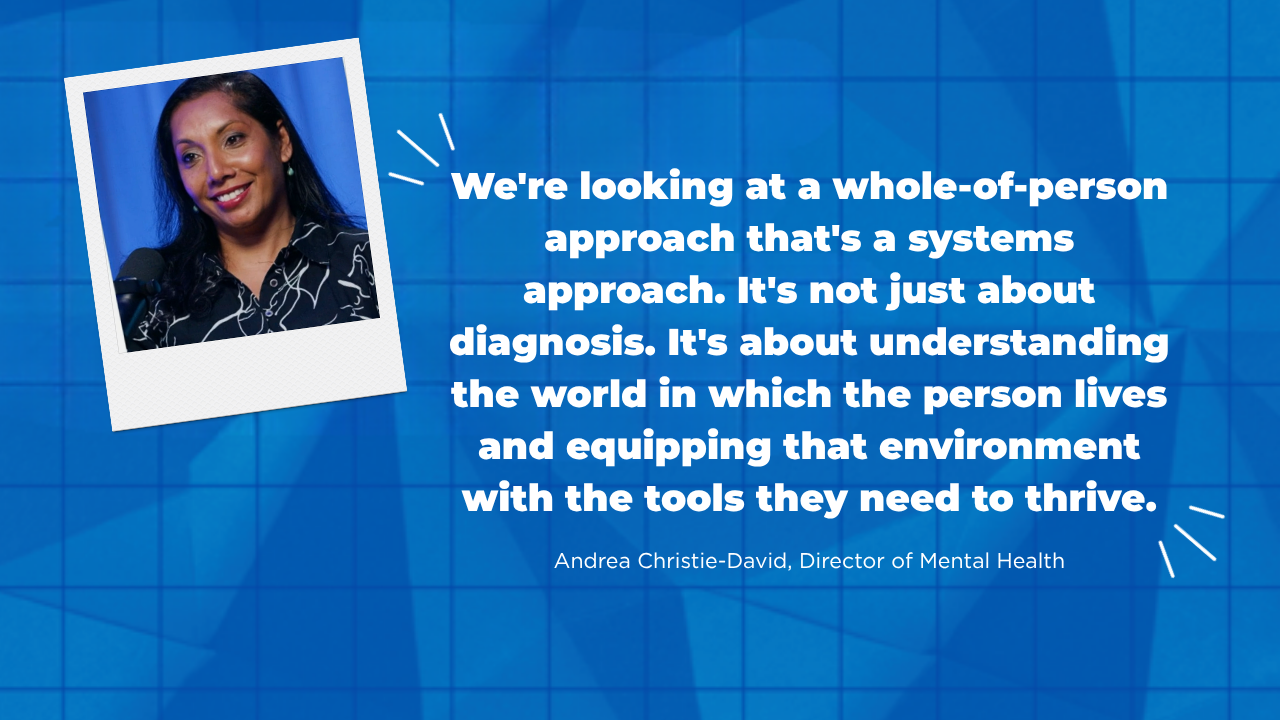 The discussion explores how this integrated approach could transform experiences for people living with conditions such as ADHD, where diagnosis is often only the beginning of a much broader journey. Rather than simply receiving a diagnosis and prescription, individuals may benefit from coordinated support that addresses routines, communication, nutrition, physical activity, workplace challenges and family dynamics.
A key theme throughout the episode is reducing the burden placed on patients themselves. Many people experiencing mental health challenges are simultaneously navigating multiple appointments, referrals, forms and healthcare providers. For some, these barriers become significant obstacles to receiving ongoing care.
Creating a more connected system has the potential to simplify access to services, reduce repetition and make it easier for people to engage with treatment over the long term.
The conversation also highlights the importance of designing healthcare with accessibility and inclusion in mind. From regional and rural communities to neurodiverse individuals and people living with disability, different populations often face unique challenges when accessing support.
By listening to communities, working alongside clinicians and adopting a co-design approach, healthcare providers have an opportunity to better understand those barriers and build services that respond to real-world needs.
Another important insight is the growing role of collaboration. Better outcomes rarely come from a single practitioner or discipline working in isolation. Instead, they emerge when clinicians, allied health professionals, families and support networks work together around shared goals and a shared understanding of the individual's needs.
For clinicians, this can also create more rewarding experiences, reducing duplication, improving communication and allowing healthcare professionals to focus on what they do best.
Throughout the episode, Andrea describes a healthcare future that is more connected, more inclusive and more practical. A future where patients spend less time navigating systems and more time benefiting from coordinated care.
As part of The Care Blueprint series, Episode 7 explores how whole-person care can strengthen mental health outcomes, improve healthcare experiences and create a more connected approach to wellbeing.