

Building the Future Aged Care Workforce
Overview
Australia's ageing population is creating one of the biggest workforce challenges facing the healthcare sector. Demand for aged care services continues to grow, expectations of care are evolving, and the industry is competing for talent in an increasingly competitive healthcare market.
In Episode 6 of The Care Blueprint, Phil Mackney, Chief Operating Officer of Bupa Villages and Aged Care, explores the future of aged care, the opportunities created by workforce growth, and what it takes to build meaningful and rewarding careers in one of healthcare's most important sectors.
Aged care is often discussed through the lens of workforce shortages, but the reality is more nuanced. Today's aged care workforce delivers increasingly complex clinical care while also supporting residents to live fulfilling, connected and meaningful lives. As the needs of residents evolve, so too do the roles, skills and career opportunities available across the sector.
Modern aged care is no longer simply about providing care. It is about creating environments where people can continue to build relationships, pursue interests, maintain independence and feel at home. This changing expectation is driving new approaches to workforce development, leadership and service delivery.
 At the same time, the sector faces significant growth. As Australia's population ages, demand for skilled carers, nurses and leaders will continue to rise. Meeting that demand requires more than recruitment alone. It requires organisations to invest in development pathways, leadership capability and creating workplaces where people can build long-term careers.
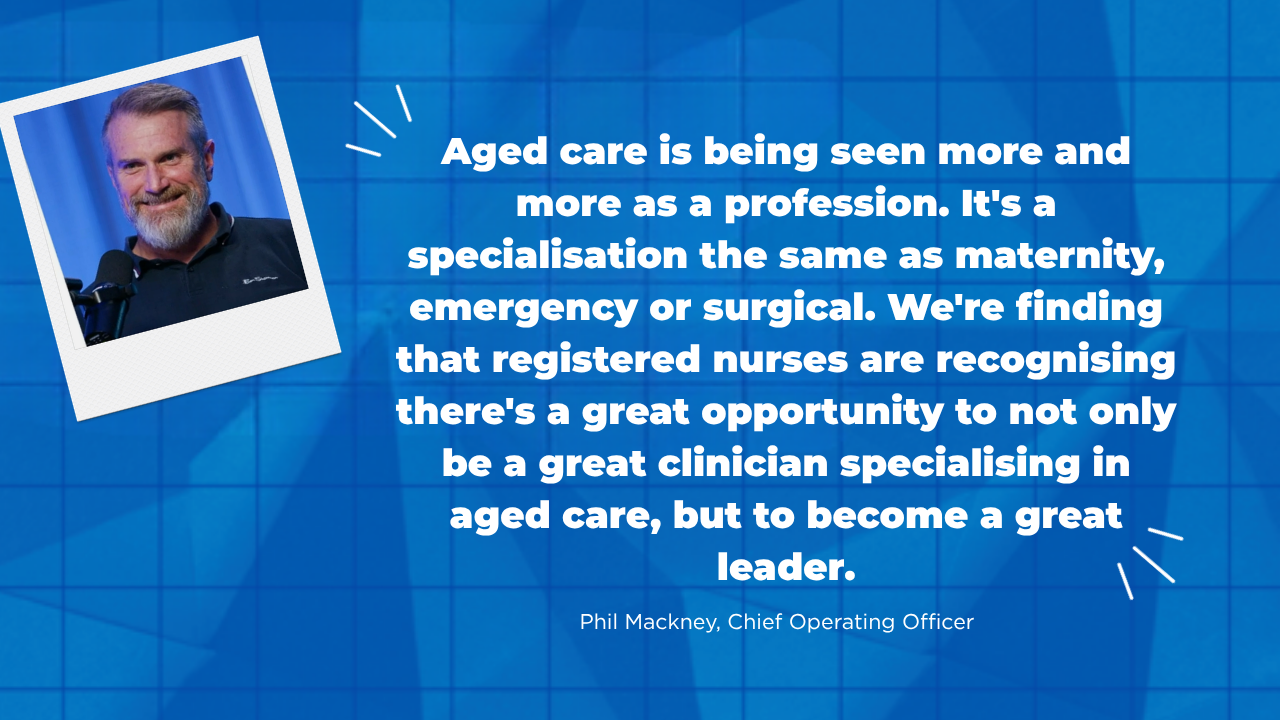
Throughout the episode, Phil highlights the importance of recognising aged care as a professional specialisation in its own right. Clinical excellence remains critical, but many roles also require strong leadership skills, emotional intelligence and the ability to work closely with residents, families and communities.
A key theme of the discussion is the opportunity for growth. From carers progressing into nursing roles to clinical team members moving into leadership positions, aged care offers diverse career pathways that can evolve throughout a person's professional journey.
The conversation also explores the important role regional communities play in aged care. In many areas, aged care providers are among the largest local employers, creating opportunities not only to deliver care but also to contribute to the strength and sustainability of local communities.
Another important focus is the value of supporting people throughout their careers. Development is not limited to formal qualifications. Mentoring, coaching, leadership programs and practical experience all play a role in helping people build confidence and expand their capabilities.
The episode also highlights the vital contribution international talent makes to Australia's aged care workforce. As workforce demand continues to grow, attracting and supporting people from diverse backgrounds will remain an important part of ensuring quality care for future generations.
At its core, Episode 6 is a conversation about people. The residents whose lives are shaped by quality care, the employees who dedicate themselves to supporting others, and the leaders investing in the future of the sector.
As part of The Care Blueprint series, this episode explores how aged care is evolving, why the workforce behind it matters, and how meaningful careers can help shape the future of care in Australia.